

Pumping projects may seem simple on paper: water enters at one location and needs to reach another. In practice, distances between these two points may be affected by differences in elevation as well as pressure requirements, solids, and other factors, as well as storage capacity,, electrical equipment, site restrictions as well as changes in flow rates.
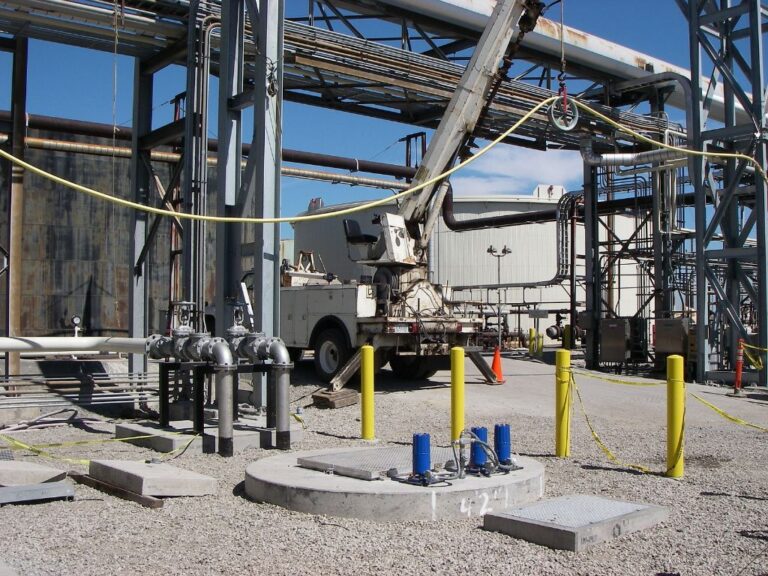
Image credit: romtecutilities.com
For Romtec Utilities, designing a pump station begins by defining those operating conditions rather than selecting equipment from a standard catalog. The project’s requirements could be used to come up with sketches and budgetary details.
Begin with a simple question: What direction are we doing?
The result immediately alters the engineering.
There are significant variations in the flow rate of wastewater that is used for domestic use. A wastewater lift station needs to transport the wastewater in a reliable manner whenever gravity conveyance isn’t available or is not adequate. Engineers should therefore take into consideration the expected inflow and peak conditions, pumping capacities as well as wet-well behaviour and discharge requirements, as well as how the equipment will be maintained and operated.
The issues of industrial water are different. Fluids which are caustic, oily or have high temperatures or pressures could be needed by a manufacturing or processing facility. Romtec Utilities creates industrial systems which are used in various applications from data centers to installations for oil and gas Food processing, power generation, and pharmaceutical waste.
Rainfall could create a completely different operating pattern
Stormwater systems are often inactive for long stretches of time and then suddenly encounter massive volumes during a storm.
A stormwater liftstation connected to an existing detention basin should be able to work in conjunction with the larger drainage plan of the site. When the basin fills up, temporary storage controls the immediate volume, and a pumping system then moves collected water toward an approved discharge point.
Romtec Utilities offered this type of solution to a Norco, California business park. The pumping equipment was needed to empty the detention reservoir and then discharge it into the stormwater network. The station therefore had to be constructed as part of the drainage infrastructure instead of being viewed as a stand-alone piece of equipment.
Package Does Not Denote “Off the shelf”
A common misconception is that a package pumping system is simply a predetermined collection of parts.
In the instance of an engineered infrastructure packaging may be a way of ensuring that all the major components are linked into a system. Pumps, meters and controls along with structures and other equipment, can be chosen according to the duty conditions.
It is particularly useful to connect a new system with an existing infrastructure. In industrial plants and municipal buildings, there’s rarely an infinite amount of space or completely clean environment for installation. Equipment may need to fit within existing structures, piping or electrical systems as well as operational schedules.
The real effects of capacity Planning
The cost of undersizing is higher as the size of the facility increases.
Romtec Utilities, a Portland International Airport utility company, has designed and constructed an sewer interceptor lift station for the PDX Next project. The new station is designed to double the capacity for peak-flow of the existing system because airport facilities are expanding.
This is a great illustration of a fundamental engineering principle: Design specifications should not be limited to the amount of work a facility is able to cope with on an average afternoon. Engineers also need to understand what happens during the times of peak demand.
The Work isn’t Complete until the Equipment arrives
At the point where drawings and calculations must become an operational system. Coordination of installation, starting, testing documentation, and operator knowledge all affect long-term performance.
What happens after the building of a pumping unit determines its value. The choices made in the initial design are clearly visible when the pump needs to be maintained as flows rise or when the weather strikes.
Romtec Utilities combines these decisions into a pumping solution which is unique to the project. This can help transform individual equipment into an infrastructure that is designed for the specific conditions it will be confronted with.